

Why Do I Sweat Excessively During Workouts?
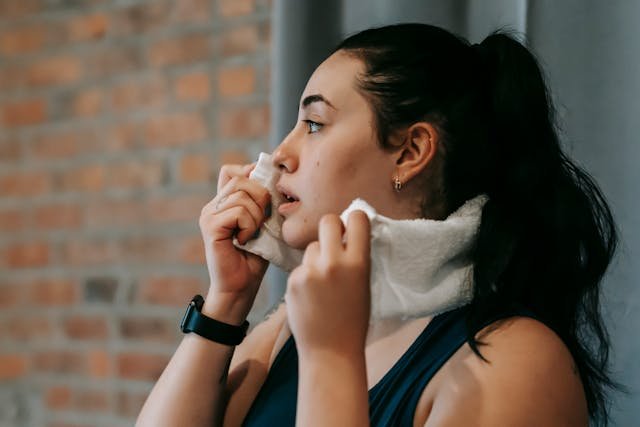
You’re finding your rhythm at the gym and suddenly notice you’re drenched in sweat. Some individuals sweat more quickly and profusely than others during physical activity. Understanding the reasons behind heavy sweating during exercise can help you gain better insight into your body and maintain control over it.
Understanding Why You Sweat When Exercising
Sweating during exercise occurs as your body’s mechanism to cool down. Physical activity or exposure to hot climates triggers your sweat glands, which release water droplets onto your skin that evaporate and cause cooling. This process is responsible for approximately 22% of your body’s total heat loss when you’re naturally undergoing thermoregulation.
Reasons for Excessive Sweating Compared to Others
If you seem to sweat more than those around you, it may be due to overactive sweat glands for several reasons. Engaging in an intense workout can elevate your body temperature more than that of others in the gym.
You might also have a condition called hyperhidrosis, which causes excessive sweating even when not in a hot environment or exercising. Estimates suggest it affects 5% of the population in the U.S. and can be associated with other undiagnosed issues, like endocrine disorders. Consult your doctor if you experience excessive sweating without a clear cause.
An increased heart rate can also trigger sweating. Certain medications may lead to a higher heart rate. Discuss with your doctor to determine if something other than workout intensity is contributing to your sweating.
Four Strategies to Manage Excessive Sweating
Sweating is a vital part of your body’s internal temperature regulation and shouldn’t be completely stopped. However, there are ways to manage excessive perspiration both during and outside workouts.
-
Consider using a product that combines antiperspirant and deodorant. These products serve distinct roles; antiperspirants block sweat glands on contact, while deodorants neutralize sweat odors. For those who mainly experience excessive underarm sweating during workouts, this combination can provide comfort and help manage odor.
-
Review the side effects of any medications you’re taking, as they could contribute to increased sweating. Discuss with your physician about switching to a similar medication with less impact on sweat production. Alternatives may be available that meet your medical needs.
-
Check the materials of your clothing. If they’re primarily dense cotton, it might be worth trying moisture-wicking fabrics designed to move sweat away from the skin to keep you more comfortable. However, remember that while less stickiness can make sweating more bearable, it doesn’t reduce the need for hydration. You still lose the same amount of water, so continue hydrating to support brain and muscle function.
-
Reach out to your doctor about medical treatments for excessive sweating. Options such as Botox injections can help manage underarm sweating. The choice depends on which sweat glands are most active.
You may also consider iontophoresis, a treatment where you immerse your hands or feet in shallow water while a device passes a mild electrical current through the skin. This treatment might be suitable if you don’t have metal implants or a pacemaker.
Gain a Better Understanding of Your Body
Sweating heavily during exercise is not unusual, and various factors may contribute to it. There are numerous potential treatments if needed. Contact your doctor to explore options that can help you feel comfortable in your skin again.
